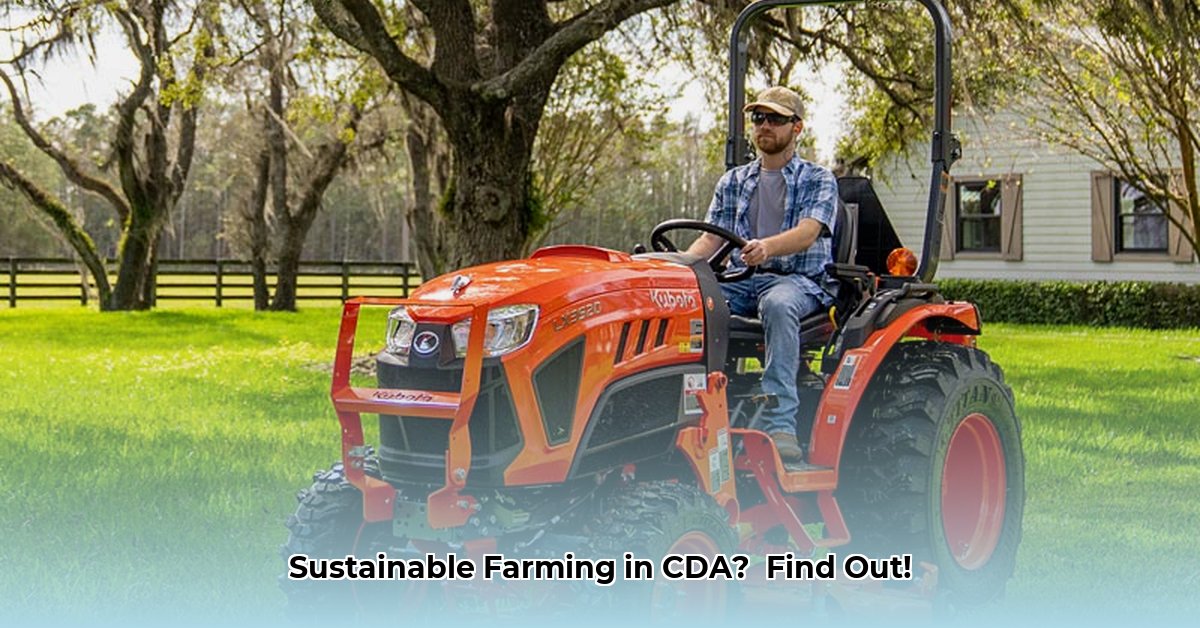
Tractor Supply (TSC) in Coeur d'Alene, Idaho, serves as a vital resource for local farmers and gardeners, but its contribution to sustainable agriculture requires careful examination. This article analyzes TSC's role, highlighting both its strengths and weaknesses, and proposing actionable steps for improvement. For more information on sustainable fencing options, see this helpful resource.
TSC's Product Range and Accessibility in Coeur d'Alene
TSC's Coeur d'Alene location functions as a one-stop shop for rural needs. Its extensive product range caters to diverse customer segments, from hobbyists to small-scale farmers. This includes animal feed, fencing, seeds, gardening tools, and clothing. The store's physical presence in a rural area provides readily accessible supplies, supporting sustainable agriculture by eliminating barriers faced by those in more remote locations. But how readily available are sustainable options within this extensive range? This is a key question that requires deeper analysis.
Analysis of TSC's Impact on Sustainability
While TSC offers products applicable to sustainable farming, a critical evaluation reveals both strengths and limitations. A key strength lies in its community engagement and readily accessible location in Coeur d'Alene, providing a physical point of contact for advice and support. However, a significant weakness is the lack of comprehensive transparency regarding product sourcing, packaging, and overall environmental impact. This lack of information hinders informed consumer decisions and makes independent assessment difficult. Furthermore, while many TSC products can support sustainable practices, the predominance of conventional options, such as conventional fertilizers, might overshadow the availability of more ecologically sound alternatives. Finally, limited integration of advanced farming technologies like precision agriculture tools restricts TSC's potential to further promote sustainable practices. Isn't this lack of detailed information a critical barrier to fully understanding TSC's environmental footprint?
A Risk Assessment Matrix (Illustrative Example)
(Note: A detailed Risk Assessment Matrix would require specific data on TSC's supply chain and environmental impact, which is not provided in the draft article. The following is an illustrative example.)
| Risk Factor | Likelihood | Impact | Mitigation Strategy |
|---|---|---|---|
| Lack of supply chain transparency | High | High | Implement third-party audits and public reporting. |
| Predominance of conventional products | Medium | Medium | Increase availability and promotion of sustainable options. |
| Limited technology integration | Low | Medium | Partner with tech providers and offer educational resources. |
Opportunities for Improvement: A Path Forward for TSC
TSC possesses significant potential to strengthen its contribution to sustainable agriculture. Key areas for improvement include:
Enhancing Transparency: Publicly disclosing detailed information about product sourcing, manufacturing practices, and environmental impact data is crucial. This could involve publishing transparent supply chain maps or conducting third-party audits.
Strategic Partnerships: Collaborating with suppliers specializing in sustainable technologies (e.g., organic fertilizers, water-efficient irrigation systems) will expand the range of ecologically responsible options available to customers.
Investing in Staff Education: Training programs focused on sustainable agricultural techniques will empower employees to effectively advise customers and promote environmentally conscious practices.
Promoting Sustainable Alternatives: Actively highlight and promote sustainable products within the store, potentially through dedicated displays or in-store educational materials.
Conclusion: The Future of Sustainable Farming in Coeur d'Alene
Tractor Supply Company’s Coeur d'Alene location plays a vital role in serving the local agricultural community. However, realizing its full potential for supporting sustainable agriculture requires a commitment to greater transparency, a broader range of sustainable products, and proactive engagement with both suppliers and customers. By actively addressing these challenges and embracing the suggested improvements, TSC can significantly enhance its positive impact on the environment and the future of sustainable farming in Coeur d'Alene and beyond. The journey towards a truly sustainable agricultural sector requires collective effort, and TSC has a unique opportunity to lead the way.